Logo
Master Your HPCSA Medical Boards with Confidence
QuestMed delivers comprehensive exam preparation with 7,000+ questions crafted specifically for South African medical graduates. Our mix of AI-generated and human-created questions covers every topic from the latest STGs and EML guidelines to verified post-exam recalls.

Try For Free


Question of the Day

During a routine newborn assessment in the delivery room, a term neonate, appearing vigorous with good colour and muscle tone, is crying. The attending midwife auscultates the heart rate to document vital signs. Which of the following ranges represents the normal physiological pulse rate for a neonate?
Answer Details
✅ Correct Answer: B. 140-160/min
📝 Explanation:

The normal pulse rate for a neonate typically ranges between 140-160 beats per minute. This elevated rate, compared to older children and adults, is physiologically necessary to meet the neonate's higher metabolic demands and compensate for a smaller stroke volume, ensuring adequate cardiac output. (Refer to South African Paediatric Standard Treatment Guidelines and Essential Medicines List (STGs & EML), Neonatal Assessment, 2024).

🔤 Memory spark:

NEO-HR: 140-160 bpm

❌ Why Wrong:
A    Incorrect. A range of 120-140/min is typically too low for a normal, active neonate and is more characteristic of an older infant or a neonate in deep sleep.
C    Incorrect. While a neonate's heart rate can transiently reach 160-180/min during vigorous crying or agitation, this represents the upper limit during activity, not the normal resting or baseline physiological range. Persistent rates in this range without clear cause would warrant further investigation.
D    Incorrect. A pulse rate of 70-90/min is characteristic of an adult resting heart rate and is dangerously bradycardic for a neonate, indicating a critical medical emergency.
🏥 Setting:

Delivery Room

⏰ Urgency:

Non-urgent

🎯 Learning Objective:

Understand normal neonatal vital sign parameters and the physiological basis for elevated heart rates in newborns.

🗝️ Key Teaching:

- Normal neonatal pulse rate is 140-160 beats per minute. - Significantly higher than adult rates due to higher metabolic demands and smaller stroke volume. - Can increase to 180/min when crying or decrease to 120/min when sleeping. - Regular monitoring is essential as part of comprehensive neonatal assessment.

💎 Clinical Pearls:

Neonatal heart rates are like hummingbird wings - they beat much faster than larger creatures because they have higher energy needs and smaller, more efficient hearts.

📖 Reference:

South African Paediatric Standard Treatment Guidelines and Essential Medicines List (STGs & EML), Neonatal Assessment (2024)

NEW

New Upgrades!

7,000+ questions including AI-generated, human-crafted prep questions, and verified post-exam recalls

Enhanced Q&A Quality

Updated the quality of our questions, answers, and explanations, and added hundreds of new high-yield questions.

Higher Quality New Questions
OSCE Simulator & AI Tutor

Practice interactive clinical scenarios and get personalized feedback from our advanced AI Clinical Mentor.

AI Tutor OSCE
Question Flagging

Spot an issue? You can now flag questions directly, helping us maintain the highest quality and accuracy for your prep.

Community Driven
Lowered Pricing

We've permanently lowered our subscription pricing to make premium medical education more accessible to everyone.

More Affordable
Dedicated OSCE Package

Check out our brand new standalone package dedicated specifically to our immersive OSCE simulator and preparation.

Targeted Practice
Based on Authoritative Sources

Our Algorithm

QuestMed’s intelligent algorithm

QuestMed’s advanced algorithm ensures you master every question in a category and subcategory before repeats, maximizing retention. Perfect for the Board exams, it builds a solid foundation with efficient, non-repetitive study.

3D Anatomy Tools

State-of-the-Art Visualization

Explore anatomy in 3D with QuestMed’s cutting-edge tools, offering clear, interactive visuals. Ideal for mastering clinical scenarios on the South African boards, it makes complex structures intuitive.

Customized Strategy

Tailored Study Plans

QuestMed crafts personalized study plans based on your strengths and weaknesses, targeting high-yield topics. It adapts to your goals, ensuring focused, effective preparation.

Up-to-Date Content

Fresh Questions

Stay ahead with QuestMed’s regularly updated questions, aligned with the latest standard guidelines. This keeps your knowledge current, giving you a sharp edge for the boards.
YOUR PERSONAL TUTOR

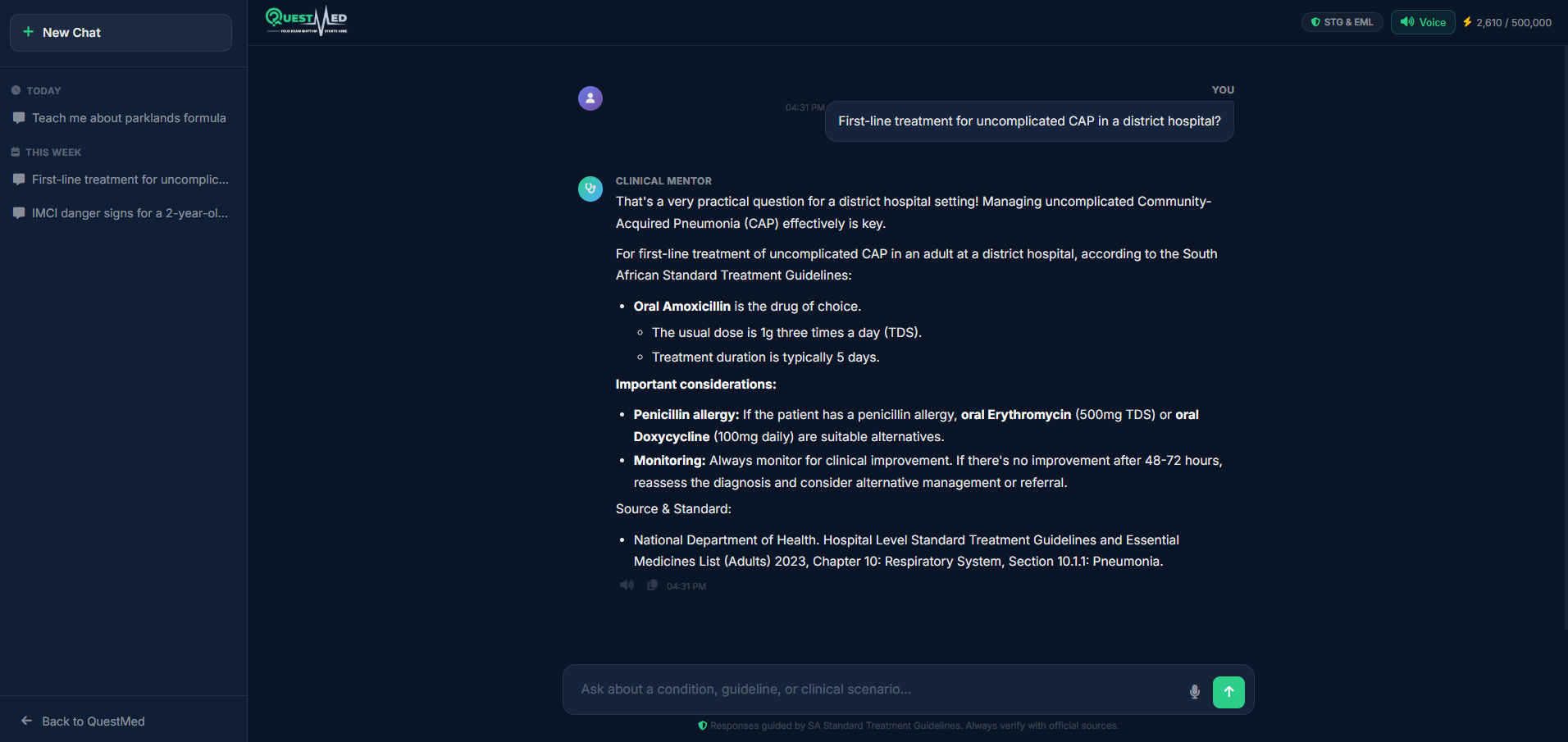
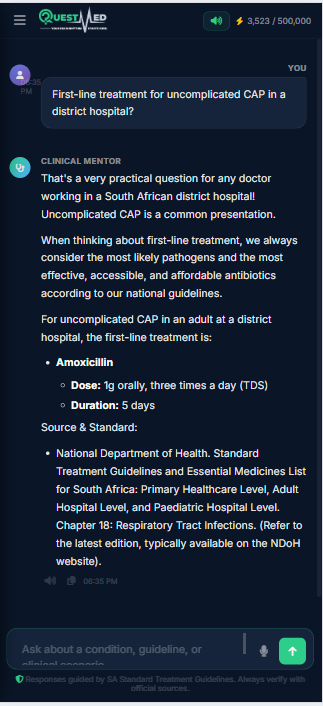
AI Clinical Mentor

Experience the future of medical education. Interact with our advanced AI tutor through text-based patient encounters. Master history taking, physical examinations, and receive incredibly detailed, personalized feedback aligned directly with HPCSA guidelines.

Smart Analysis

Instant evaluation of your clinical reasoning

Real Interaction

Conversational patient simulations

AI Mentor Interface AI Mentor Interface
CLINICAL EXAM PREP

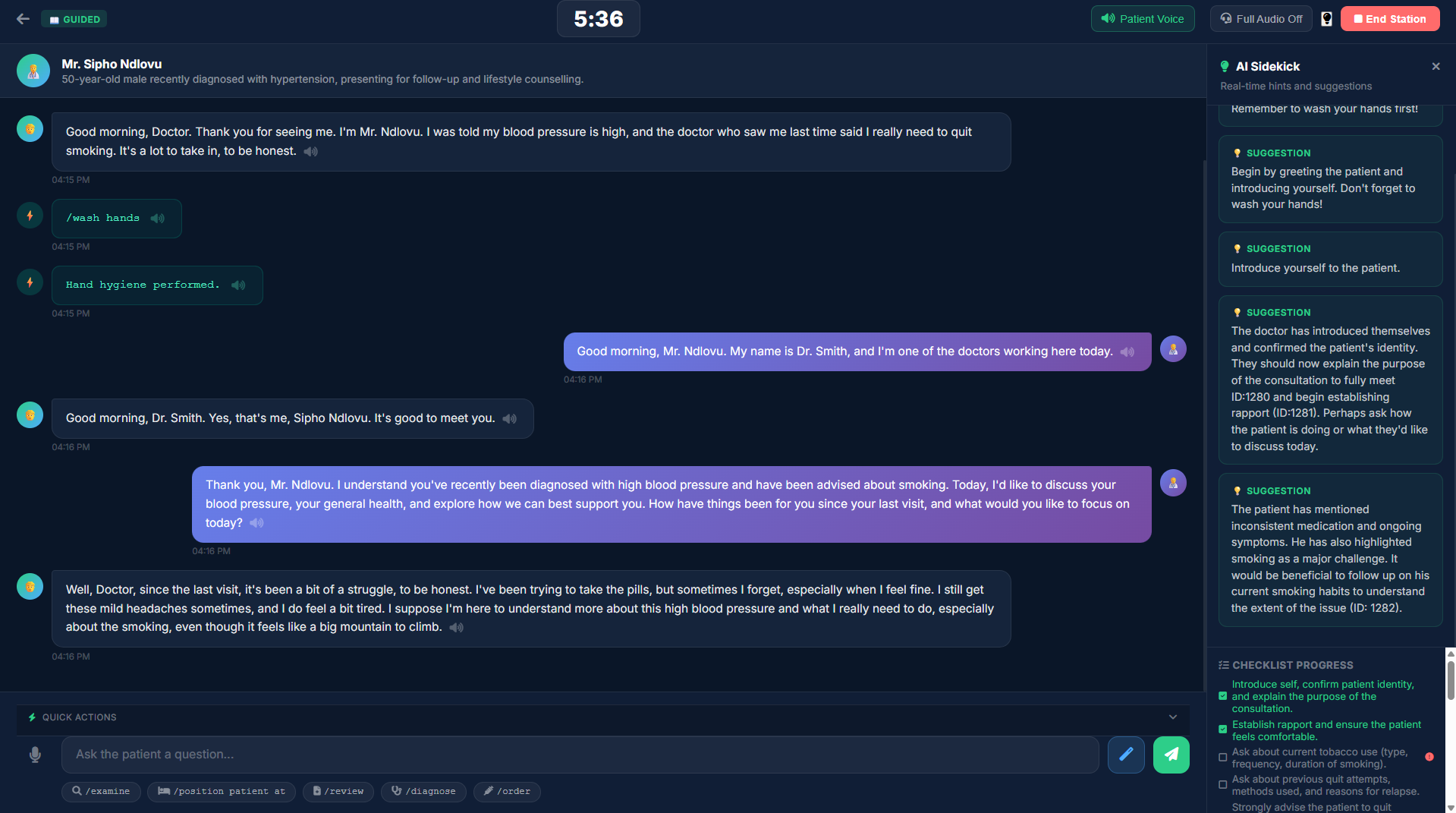
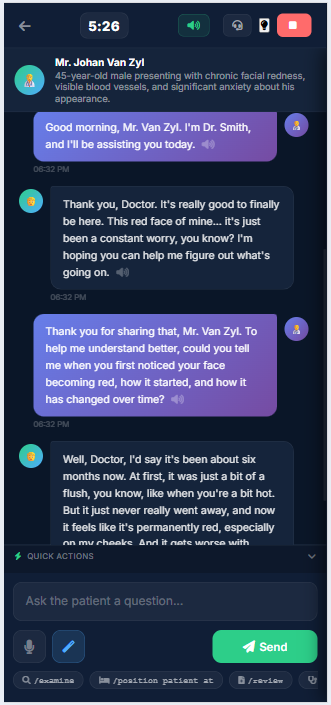
Immersive OSCE Simulator

Step into realistic, high-stakes clinical scenarios. Our interactive OSCE simulator places you right in the examination room. Practice interpreting findings, formulating precise diagnoses, and constructing comprehensive management plans under realistic conditions.

  • Timed Scenarios

    Replicate the pressure of actual board exams

  • Diverse Cases

    Covering all major disciplines and sub-specialties

OSCE Simulator OSCE Simulator
3D BioDigital Technology

Interact With This 3D Brain

Feel free to rotate, zoom, and explore our interactive 3D models, including the brain, heart, and full male and female bodies! Tailored for South African medical board candidates, these tools bring anatomy to life, ensuring you master clinical concepts with precision.

Question Bank

The First Medical Question Bank Created Exclusively For South African Medical Students and Doctors.

Benefits

QuestMed empowers you with a strategic edge in medical education

Comprehensive Mastery:
Our algorithm ensures total command of each topic, leaving no knowledge gaps.
Optimized Efficiency
Avoid repetitive study with a streamlined, focused approach.
Enhanced Confidence
Detailed analytics provide clear insights into your strengths and progress.
Superior Visualization
3D anatomy tools deepen your understanding of complex structures.

What's Inside?

What's Inside?

CUSTOMIZED TEST
Create personalized tests tailored to your specific needs and study goals.
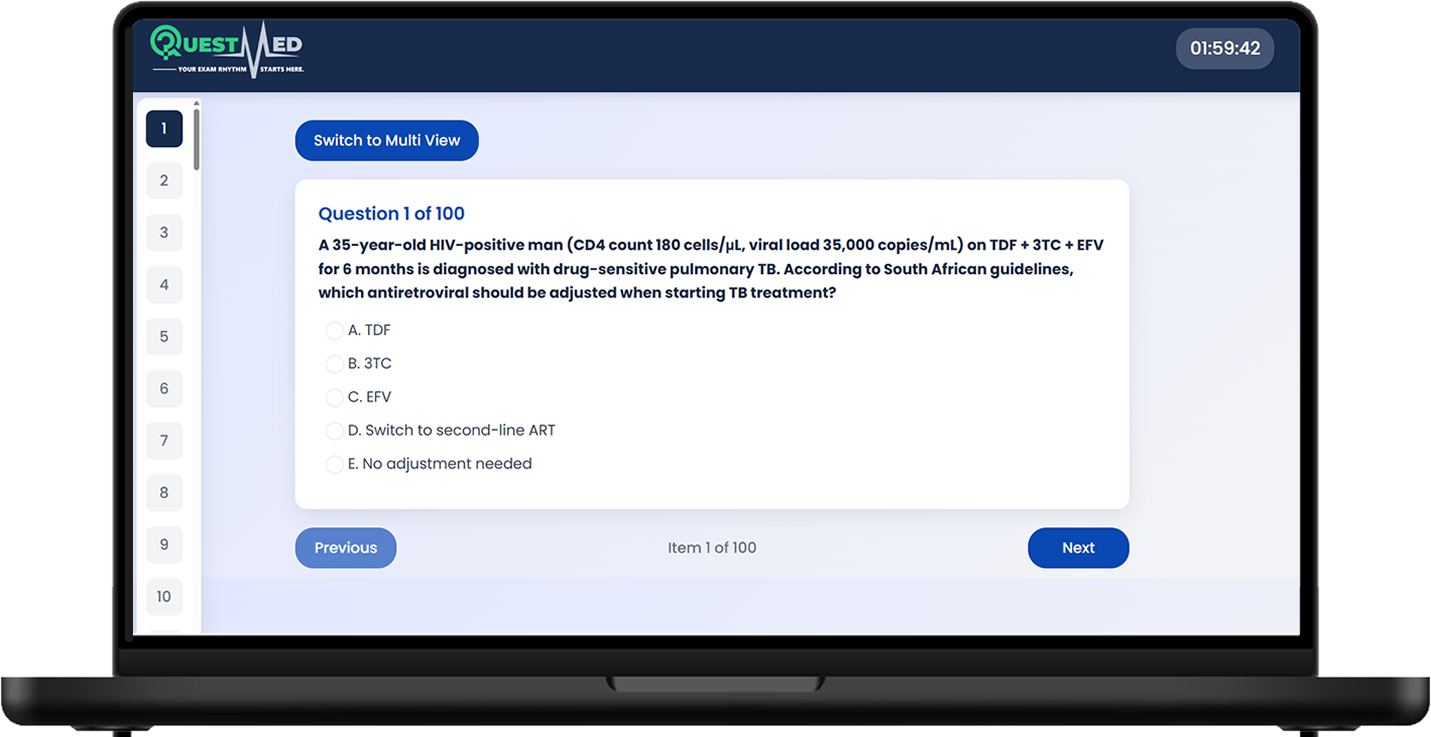
MOCK EXAM
Simulate real exam conditions with comprehensive mock exams.
STUDY MODE
Focus your study sessions by selecting specific categories to master.
30 Day Preparation Journey
Experience a customized approach with an advanced 30 day study mode.
OSCE SIMULATOR
Practice clinical reasoning and examination in immersive text-based scenarios.
AI CLINICAL MENTOR
Get real-time, personalized feedback on your clinical performance from our AI tutor.